
Michoacán coast
Field note - Mexican Pacific - Ojo de Agua
Exploring the little known underwater life of the Michoacán coast in conditions of limited visibility.
"I've experienced my fair share of dives in murky waters—winter swells, plankton bloom red tides, silt-filled shallows, and river mouths after summer rains. I've navigated conditions that many divers would deem less than enjoyable. Due to my apparent tolerance for suboptimal situations, I've never abandoned a dive due to poor visibility—until today.
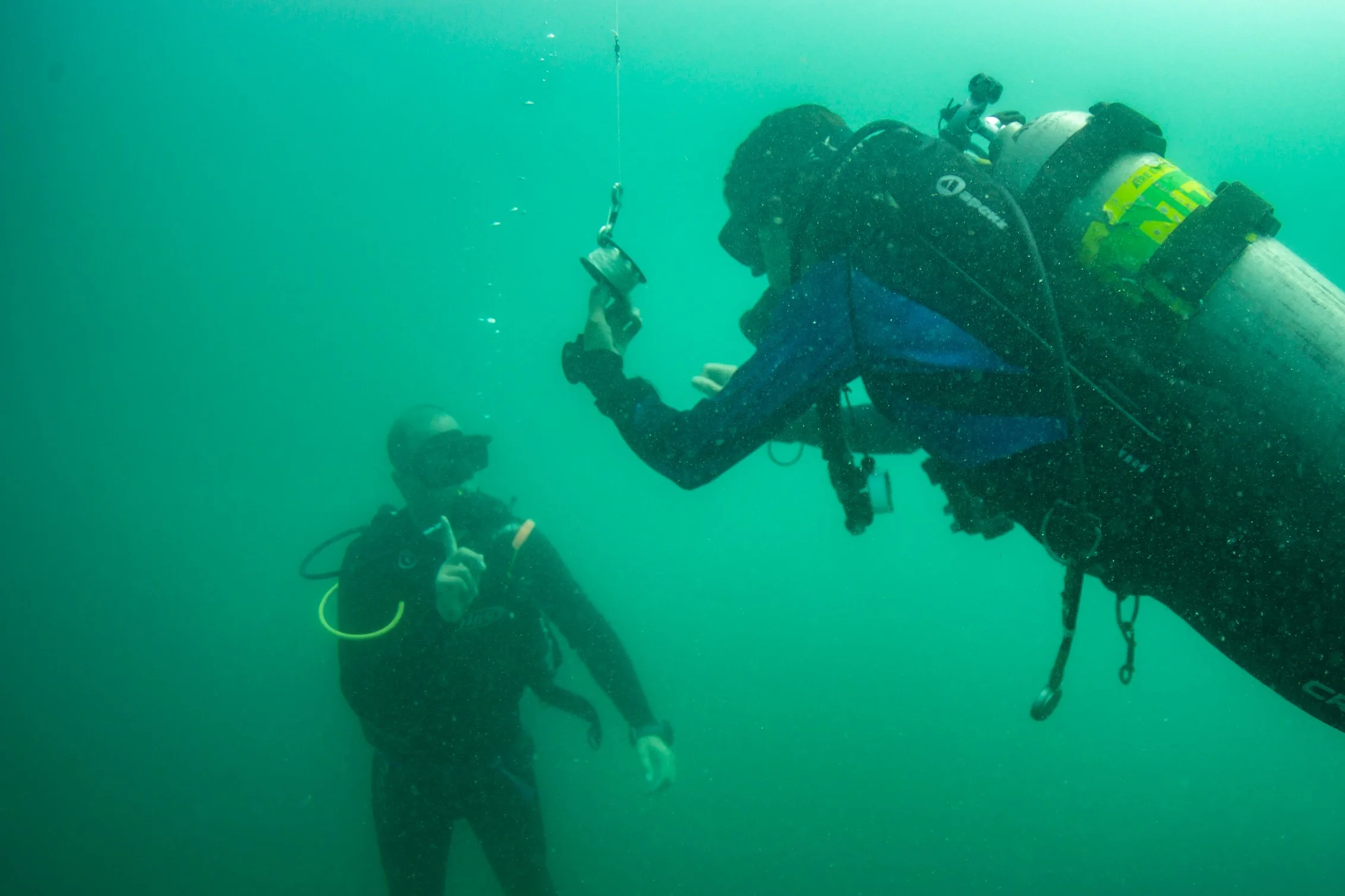
I find myself on a panga half a mile from the shore, accompanied by three local fishermen and my friends Manfred and Marimar. We're exploring the relatively uncharted and wild coast of Michoacán state in Mexico, aiming to uncover the state of preservation of the underwater life in this area. At least, that was our initial goal.
So, here we are on our second day, having completed four dives with little to show for our efforts. Both Manfred and I have underwater cameras, but my memory card is almost empty, and I doubt Manfred fared much better. With this being our last tank and having just used up a quarter of its content, we can't deny feeling a bit disheartened.
'What's next then?' We consult the locals and quiz them about other potential reefs to visit. 'Perhaps we might find better conditions farther from the shore?' we ask. 'There is a pinnacle a few miles west of here,' the captain volunteers. 'Lots of large sharks around,' he adds as an afterthought. We look at each other. 'Large sharks? That could be quite interesting at near-zero visibility.'
We consider our options and finally decide to head back to our camp and dive around a rocky point we explored yesterday. Conditions were far from great, but the spot did look interesting: sandy bottom surrounding a nice reef with a few overhangs and crevices. As far as we could tell in the poor visibility, there were lots of fish around a wall covered with a variety of corals.
When we arrive a few minutes later, the surface conditions look just like yesterday; swells still assault the rocky point, and shallow reefs are awash with foam. Since we had already geared up, we are in the water in seconds. When the bubbles disperse in front of my dive mask, I blink. 'Hm, this is not bad!' The water is much bluer than yesterday, and visibility is at least double. A few kick cycles take us into calm water sheltered by the coral-covered wall we noticed yesterday. Only today, we can see it properly.
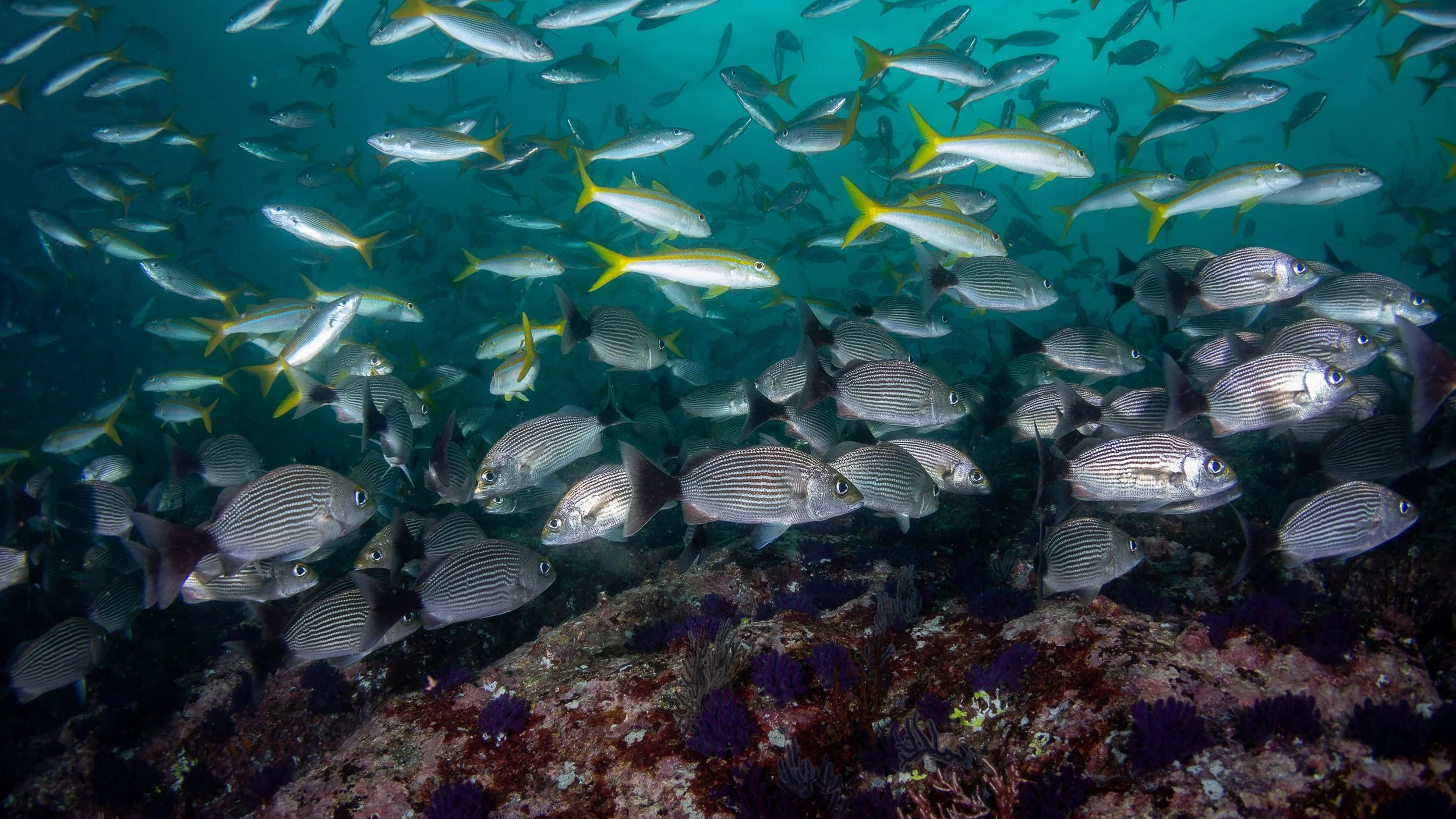
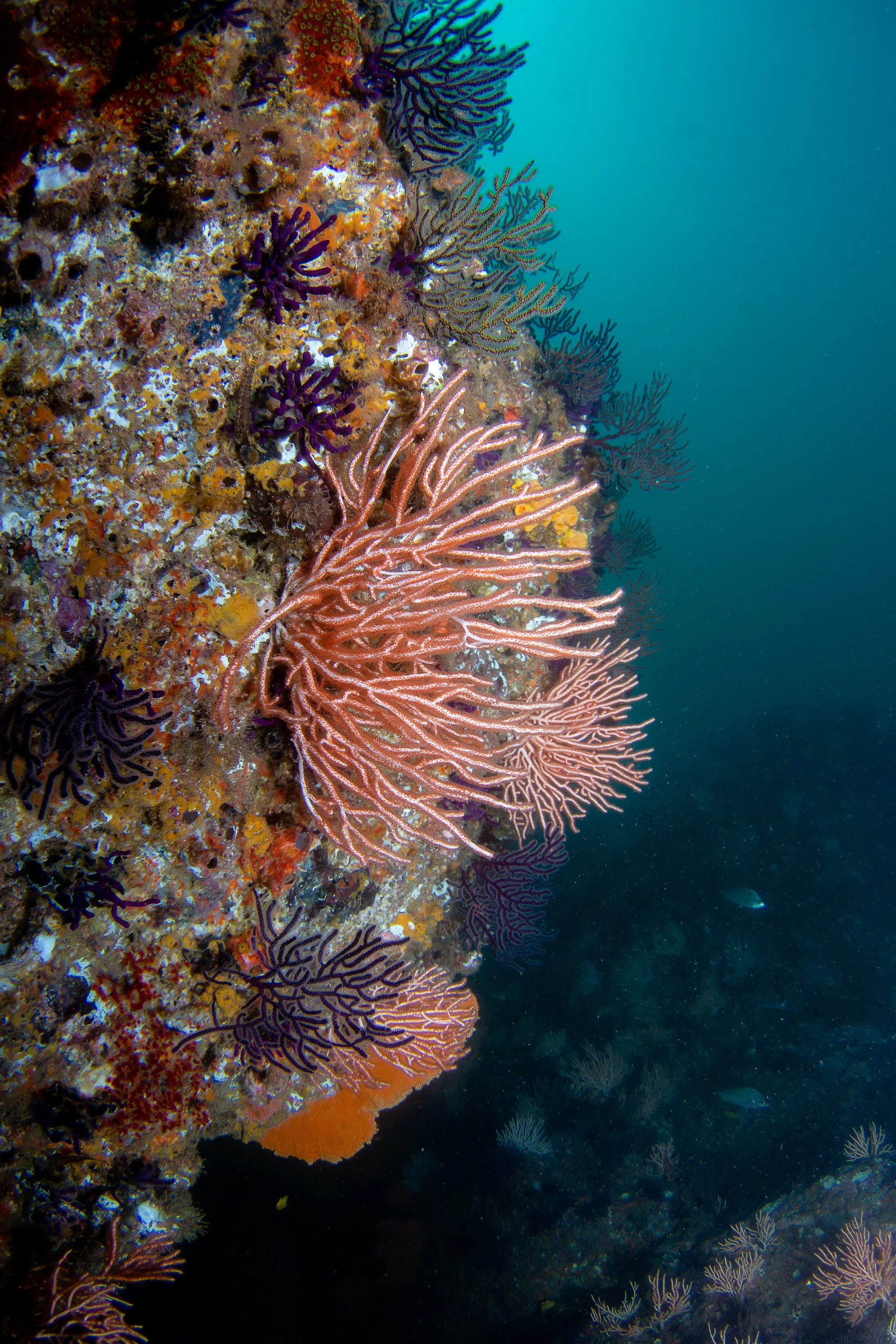
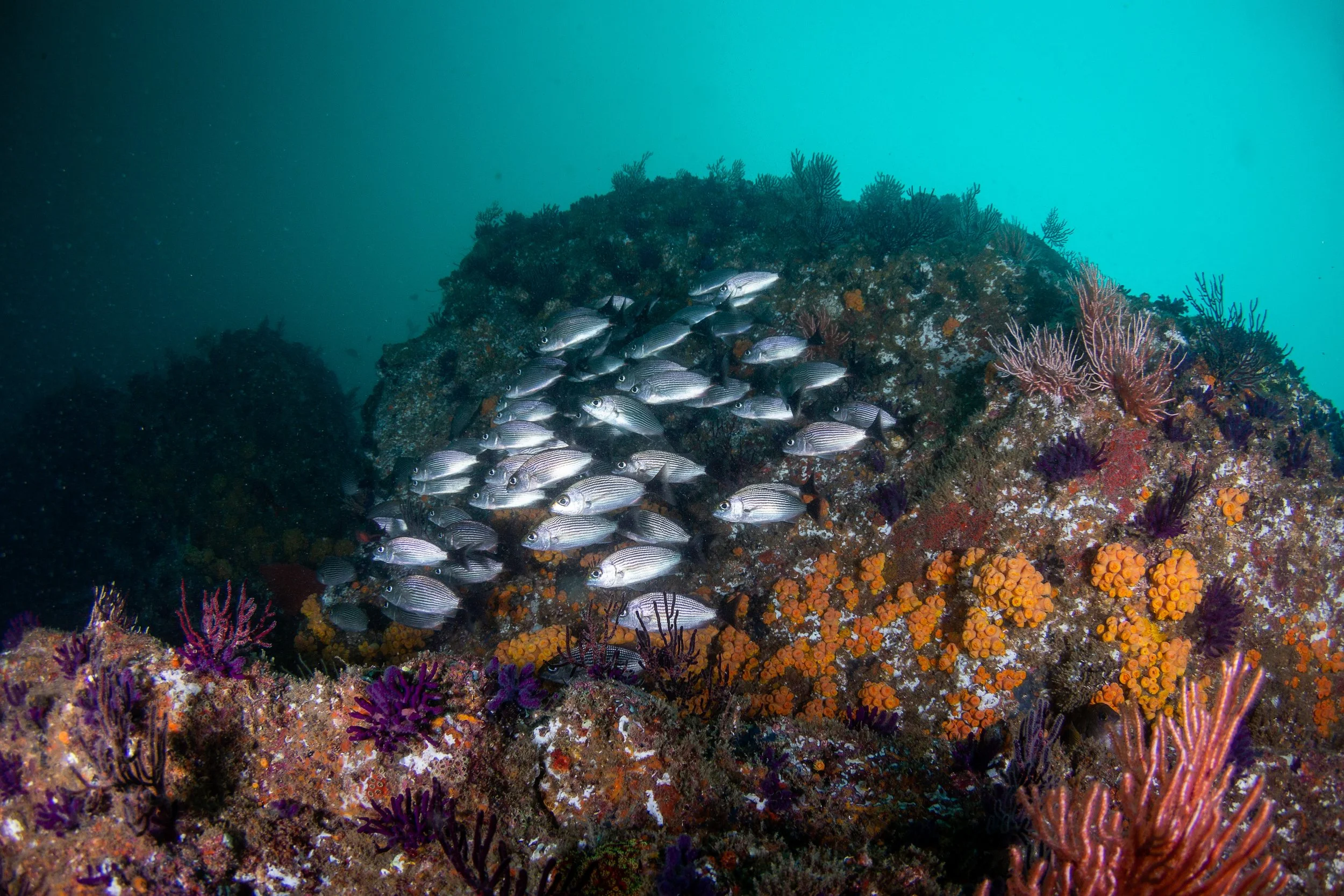
In this instant, our expedition turns from an exercise in futility into a proper and exciting exploration. I am truly, genuinely, and instantly happy. I am thrilled. This little corner is amazing. Giant clouds of Spottail grunts envelop the rocky formations and open up as we approach to reveal a coral-covered scenery. Oranges, whites, pinks, purples, and yellows—small, but plentiful Gorgonian corals are everywhere, interrupted on the steeper walls by clumps of Tubastraea. I turn around to look at my friends. Their unbelieving expressions say it all. We found what we hoped for. Abundant sea life in a spot no one has likely ever dived before. We enjoy every second of our remaining air here. I finally take some decent shots.
When we surface, I look over at Marimar and Manfred and see the same transformation I feel inside me. This might not have been the best dive of our careers, but right now—after the struggle we endured—it sure feels like it. We talk and talk, sharing our impressions, surprise, and awe. We cannot keep our mouths shut.
Later that day, as I drive up north along the Panamerican highway, I still cruise on this warm feeling of satisfaction. I know I will gladly drive again for 12 hours to come back for more."