
Eeagles
Field note - Mexican Pacific - Banderas Bay
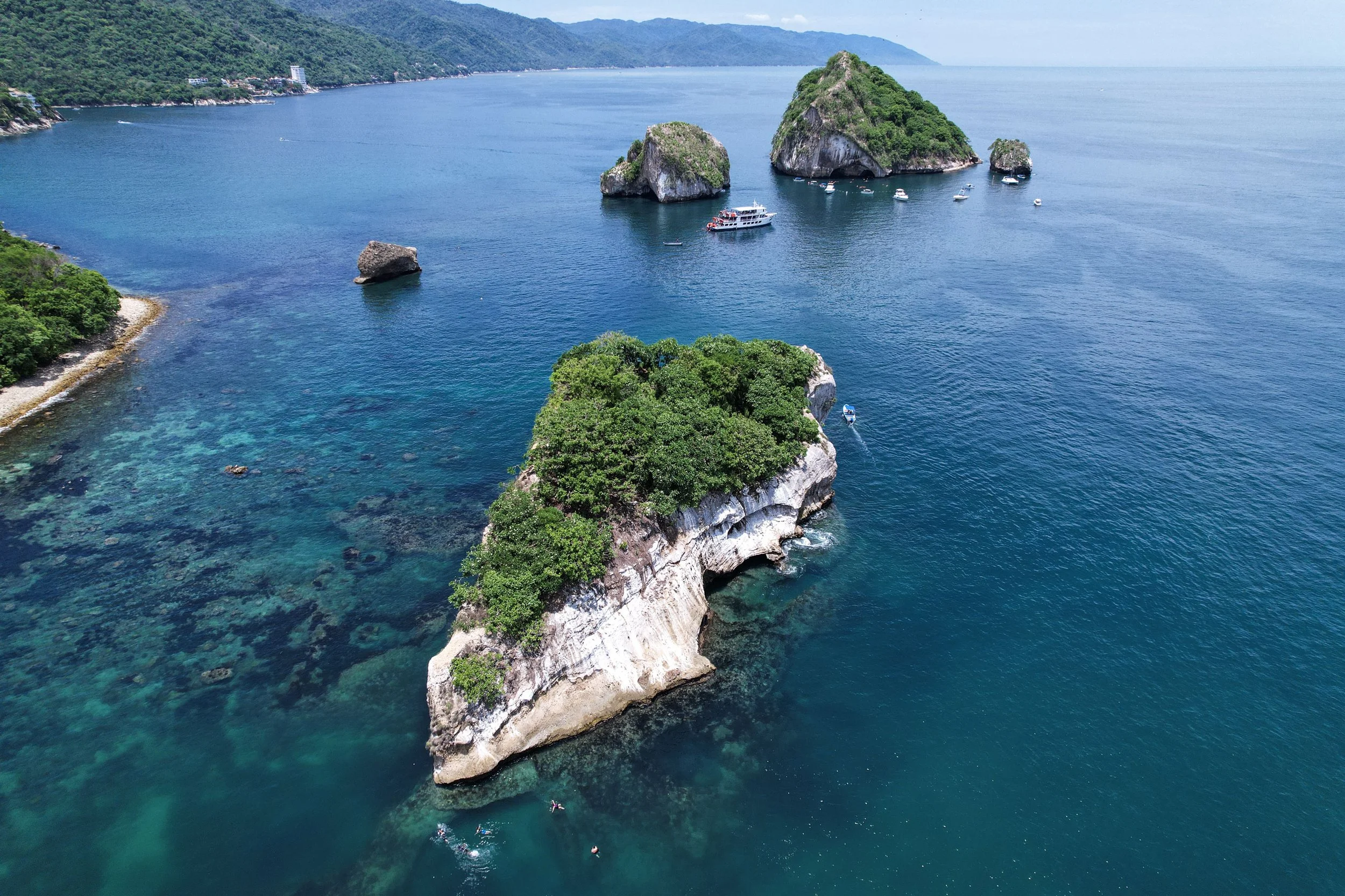
Scouting and photographing an Eagle ray aggregation site inside the arched tunnels at Los Arcos, Banderas Bay.
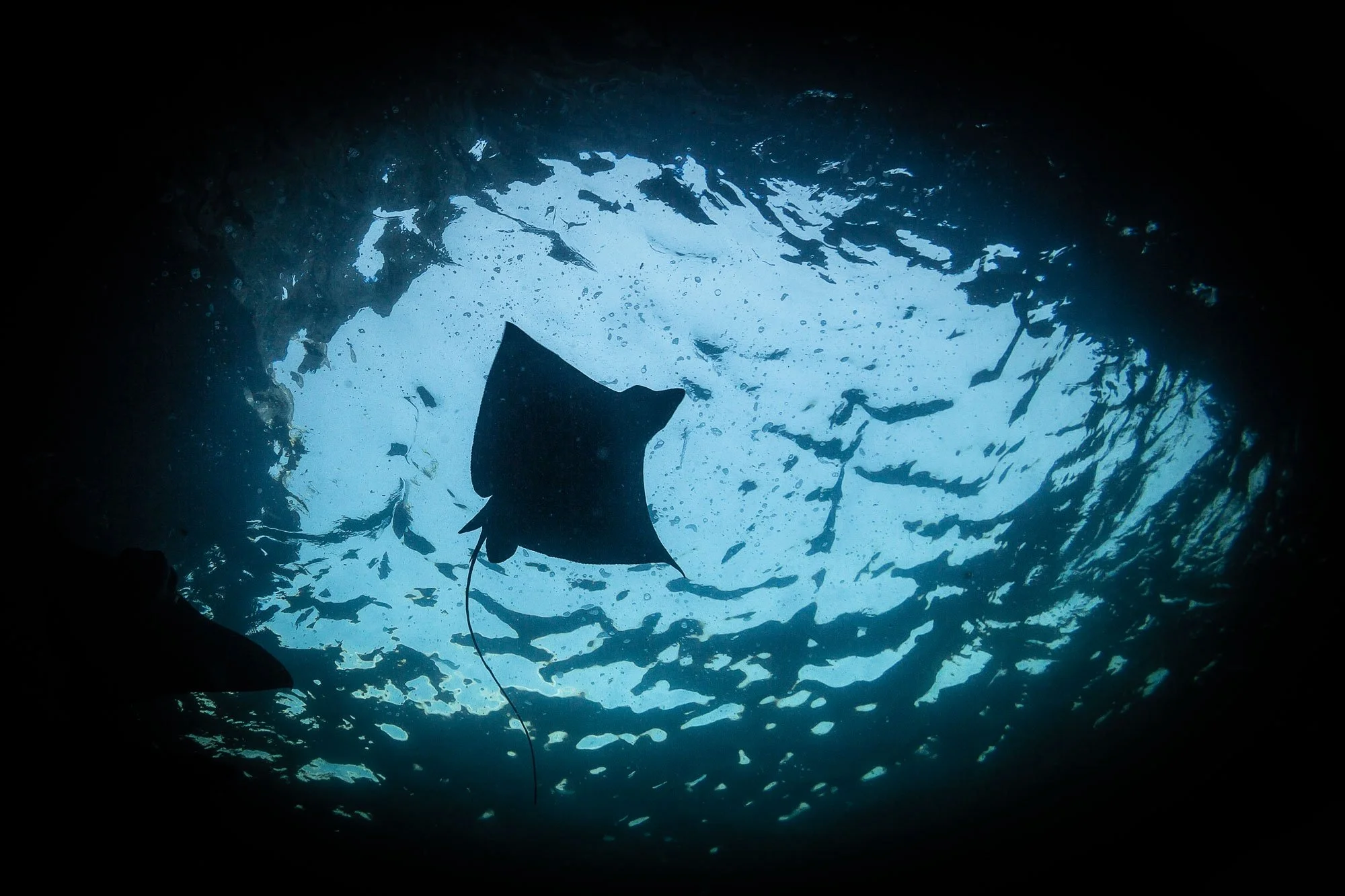
I am lost. Distracted by a beautiful stonefish, I took too long trying to get the perfect photo; I lost sight of the dive group. I have only a vague idea of which way to go. That alone wouldn't bother me much. This happens to me all the time. I know the procedures. Now, however, I am supposed to follow Cesar into underwater territories unknown to me. From our usual starting point in Las Lajas along a course, I have never taken before to one of the rocky arches we do not visit very often. The spot seems to have become a favorite hangout for a group of Pacific spotted eagle rays, and Cesar is eager to show me. I am keen to see, of course. I have met these magnificent, classy-looking, and graceful rays in the past, but usually only briefly and never more than one or two at a time. I am also sorry to report that I do not have a single decent photo of one. Today, I meant to change that. Now, I might not have a chance.
I stop, check my compass, and look around. Cesar has a decade and a half of know-how over me here. I bet he could find his way blindfolded, but I do not recognize any of the features around me. I do a 360 scan looking up to see if I can spot any bubbles. Nothing. I consult my compass again and decide on a course. I fold my strobe arms, clip my camera to its chest harness and kick off from the bottom. I am not ready to give up yet. I remember Cesar telling me the arch entry has a distinct wall on either of its sides. If I run into one, I should be able to tell. I clutch my camera rig tight to my chest to minimize its drag and frog-kick forward. I pry my eyes away from a very nice reef I would otherwise love to explore and swim on.
It doesn't take long, and I can see a gently rising reef on my right. I follow along its edge and peer over. Sure enough, a deep gully separates it from what seems to be a shadow of a similar wall farther out. I dip into it and let it lead me forward. Looming darkness grows ahead of me. I know I made it. I am swimming towards a large tunnel. I unclip my camera and switch on the strobes. As I drift in, I can see human shapes knocked out black against the light pouring in from its other side. I found my dive buddies. Then a movement catches my eye. A dark, undulating carpet-like wave approaches; two more follow – Eagles. I let them slip by. I want to see what they do before spooking them with my strobes. I try to stay as motionless as possible, but as I exhale, my bubbles startle the last ray, and with a flick of its pectoral fins, it vaults over me - gone in a flash. I swim on to report to Cesar. The rest of the dive group is running low on air, and he will lead them to the surface, his hands explain. I nod. As we turn around and swim back to where I just came from, I can see a faint shadow of our boat waiting on the surface to receive the divers. I tug at Cesar's fin and signal with my hands, "Go ahead, I will hang back for 5".
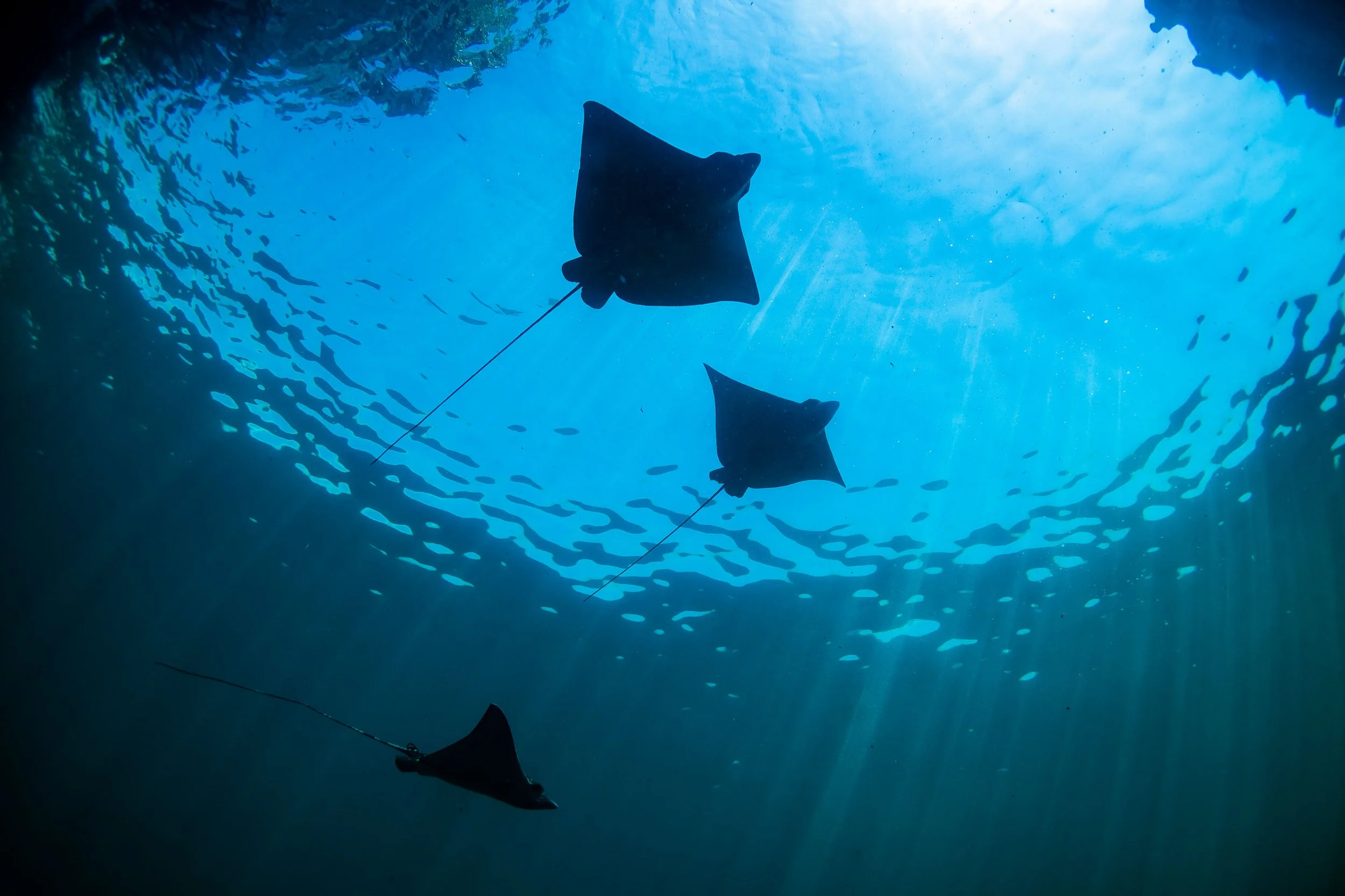
I deflate my BCD slightly to sink. My idea is to stay as invisible as possible, hoping the rays will come back. Sharp, rough, fist-size rocks cover the bottom here, and the gentle but persistent swell would drag me back and forth over this cheese grater-like floor should I try to park myself on it. I need to stay afloat in the water column. So, I hover and wait. Then I see them again. Three eagle rays, one after another, glide in above me - dark silhouettes against the frame of the tunnel entry. I am ready for this. With my strobes turned off, I snap a photo of the three shadows standing out against the blue. The Eagle rays don't seem to have noticed me, but instead of entering the tunnel, they swing left and disappear from view. In a minute, they are back, though, and I take another shot. The third time around, I count five.
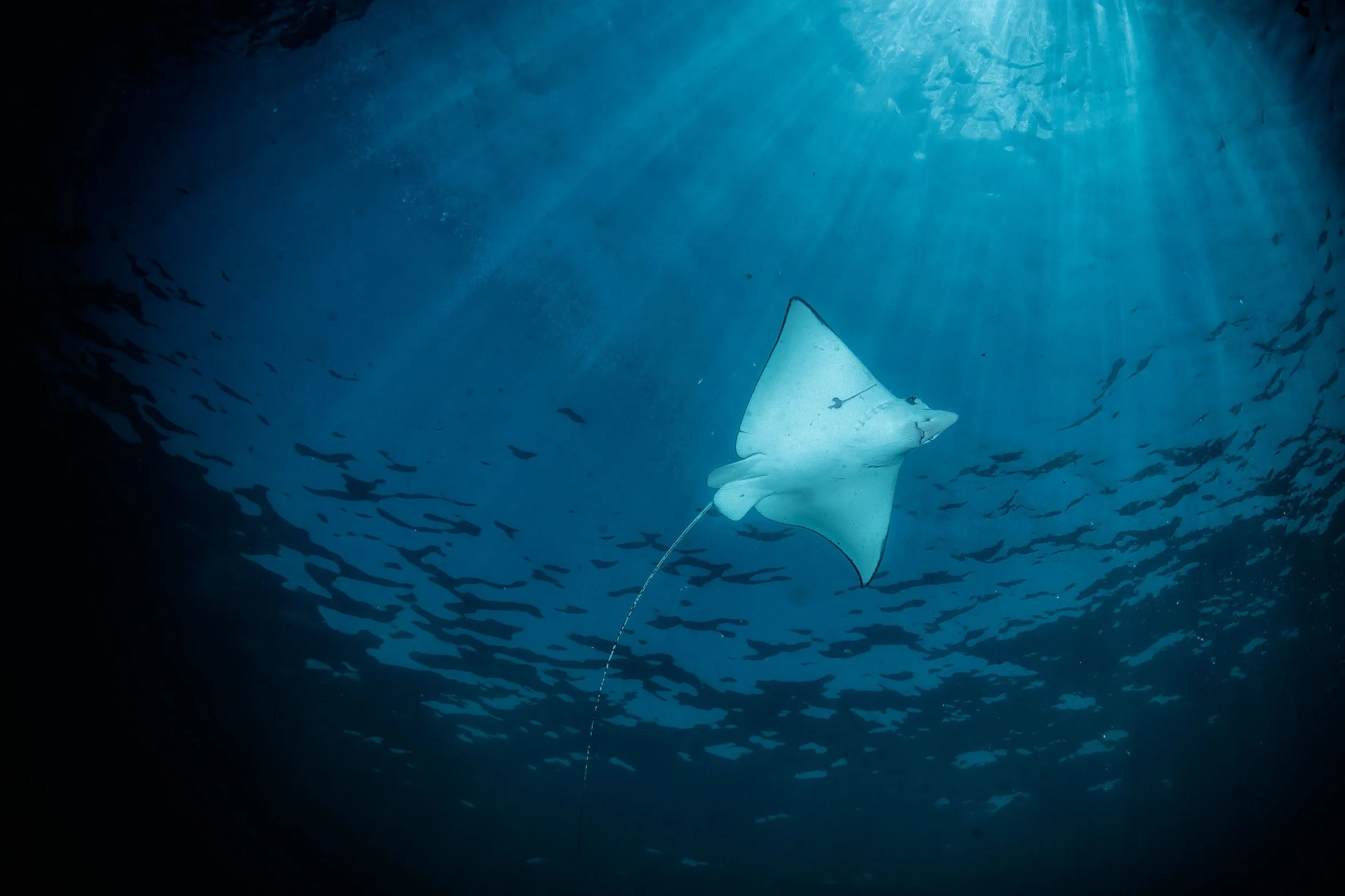
I am happy with the photos I took. Still, before I return to the surface, I decide to turn my strobes on and get something my friends from Aetos.id - the Pacific Eagle Ray Research and Conservation Project Network could use to photo ID the individuals. The dorsal side with its white-on-black pattern is much better, but I am told a photo of the white ventral surface can also be valuable. As expected, the rays are not very happy with my flashing lights, and with three photos in the box, I decide to grant them their peace. "What draws them to this place?" I wonder as I start my ascent. "Shelter?" For sure. This tunnel is undoubtedly the one least visited by boats in the area. Could there be something more to this, though?
Later, as I go through my photos at home, I try to find answers on the internet. I browse Google Scholar and Research Gate, but apart from the 2014 publication establishing A. laticeps as a new species, splitting it on the genetic basis from A. narinari, I find only basics I already know. There is no doubt our knowledge of these wonderful rays is limited. In light of this, you need to appreciate initiatives such as (Aetos.id) for taking a step in the right direction. The idea to leverage data collected by scuba divers and snorkelers to identify and better understand the natural history of the Pacific spotted eagle ray is proving to be a low-cost and incredibly effective way to find out more. Today, anyone who manages to snap a photo or a video clip of A. laticeps anywhere between Mexico and Ecuador (its range of distribution) can upload it to Aetos.id via an online form.